Now Reading: Travel eSIM vs International Roaming: Which Saves More Money in 2026?
-
01
Travel eSIM vs International Roaming: Which Saves More Money in 2026?


For today’s travelers, staying connected is no longer a luxury-it’s an essential part of every journey. Whether you’re navigating unfamiliar streets, booking transportation, communicating with family, attending virtual meetings, or sharing travel experiences online, reliable mobile internet has become a necessity. As international travel continues to grow in 2026, many travelers face the same important question: travel eSIM vs international roaming-which option offers the best value?
While traditional roaming services remain widely available, the rise of digital SIM technology has introduced a more flexible and often more affordable alternative. Understanding the differences between these options can help travelers avoid unnecessary expenses while enjoying uninterrupted travel connectivity across multiple countries. This guide compares both solutions, explores their advantages and limitations, and helps you decide which option best suits your travel style and budget.
Understanding International Roaming
International roaming allows your existing mobile carrier to connect your phone to partner networks while you travel abroad. This means you can continue using your regular phone number, make calls, send messages, and access mobile data without changing your SIM card.
Although roaming is convenient, the associated roaming charges can vary significantly depending on your mobile provider, destination, and usage. Some carriers offer daily travel passes, while others charge separately for calls, text messages, and data consumption. For travelers visiting multiple countries, these costs can add up quickly, making roaming an expensive option for extended trips.
Despite these challenges, roaming remains useful for short business trips or travelers who require uninterrupted access to their primary mobile number without additional setup.
What Is a Travel eSIM?
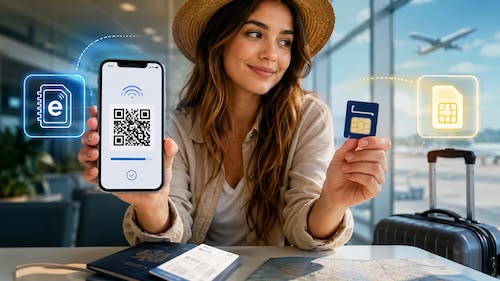
A travel eSIM is a digital SIM profile that can be installed directly on compatible smartphones without inserting a physical SIM card. Users simply purchase a plan online, scan a QR code, and activate mobile data before or after arriving at their destination.
Unlike traditional roaming, a travel eSIM allows users to purchase regional or country-specific data plans from independent providers. This approach gives travelers greater control over their mobile expenses while reducing dependence on expensive carrier roaming packages.
As more smartphones support eSIM functionality, digital connectivity has become one of the most convenient solutions for international travel.
Comparing Costs: Which Option Saves More?
The biggest factor in the travel eSIM vs international roaming debate is cost. For many travelers, a travel eSIM provides significantly better value, especially during longer trips or visits to multiple countries.
Traditional roaming packages often charge daily access fees or apply premium rates for data usage. These expenses can become substantial when using navigation apps, streaming services, cloud storage, or video calls throughout a trip.
Travel eSIM providers, on the other hand, typically offer prepaid plans with transparent pricing and fixed data allowances. Travelers know exactly how much they are paying before departure, making budgeting easier and reducing the risk of unexpected charges after returning home.
For budget-conscious travelers, this predictability is often one of the strongest reasons to choose an eSIM.
Travel Connectivity Across Multiple Countries
Reliable travel connectivity becomes especially important during multi-country trips. Constantly changing physical SIM cards or purchasing local plans at every destination can be inconvenient and time-consuming.
Many travel eSIM providers now offer regional plans covering dozens of countries within Europe, Asia-Pacific, North America, Latin America, or the Middle East. Travelers can move seamlessly between destinations while maintaining uninterrupted internet access.
By contrast, international roaming policies often differ between countries, with varying prices and network agreements depending on your mobile carrier.
For travelers visiting several destinations in one journey, eSIM technology generally provides a smoother and more consistent experience.
Popular eSIM Providers Worth Considering
The rapid growth of digital SIM technology has encouraged several companies to specialize in international travel connectivity.
Airalo has become one of the most recognized names in travel eSIM services by offering affordable country-specific and regional plans across more than 200 destinations.
Holafly appeals to travelers who need larger data allowances, with many plans offering unlimited or high-capacity mobile internet.
Nomad focuses on flexible prepaid options with transparent pricing, making it suitable for both vacation travelers and digital nomads.
Business travelers often choose GigSky and Ubigi, which provide extensive international coverage while supporting smartphones, tablets, and connected devices.
In addition, traditional carriers including AT&T, Verizon, T-Mobile, Vodafone, O2, EE, Orange, Mint Mobile, Tesco Mobile, Virgin Mobile, Boost Mobile, iD Mobile, and Kena Mobile continue expanding eSIM support for compatible devices.
Mobile Data Abroad: Which Is More Reliable?
Access to reliable mobile data abroad depends on both the provider and the local partner networks available in each destination.
Many premium eSIM providers partner with major local carriers to deliver high-speed connectivity similar to traditional mobile services. Performance may vary slightly depending on coverage and network congestion, but modern eSIM solutions generally provide dependable internet for navigation, messaging, browsing, video calls, and remote work.
International roaming also relies on partner networks, meaning service quality is often comparable. However, roaming users may occasionally experience higher costs or speed limitations depending on their carrier’s agreements.
Choosing a reputable provider is essential regardless of the option selected.
Which Option Is Better for Different Travelers?
The right solution depends largely on travel habits rather than technology alone.
Frequent international travelers, digital nomads, backpackers, and remote workers typically benefit from travel eSIMs because they offer flexible data plans, predictable pricing, and regional coverage.
On the other hand, business professionals traveling for only a few days may find traditional roaming more convenient if their employer covers expenses or if they need uninterrupted access to their existing number without additional configuration.
Understanding your travel frequency, destinations, and expected data usage makes selecting the right option much easier.
Saving Money Without Sacrificing Convenience
Managing your travel budget involves more than finding inexpensive flights or accommodation. Mobile connectivity has become an important travel expense that deserves careful planning.
Travelers can reduce costs by purchasing prepaid eSIM plans before departure, monitoring data usage through provider apps, downloading offline maps, and using hotel or airport Wi-Fi when appropriate.
These simple strategies help maximize connectivity while keeping overall travel expenses under control.
Frequently Asked Questions (FAQs)
1. What is the difference between a travel eSIM and international roaming?
A travel eSIM uses prepaid digital mobile plans from specialized providers, while international roaming allows your existing carrier to provide service through partner networks abroad.
2. Does a travel eSIM save more money?
In many cases, yes. Travel eSIMs often offer lower roaming costs, transparent pricing, and flexible prepaid data plans, especially for longer international trips.
3. Which travel eSIM providers are most popular?
Leading providers include Airalo, Holafly, Nomad, GigSky, Ubigi, along with telecom companies offering eSIM support such as AT&T, Verizon, T-Mobile, Vodafone, O2, EE, Orange, Mint Mobile, Tesco Mobile, Virgin Mobile, Boost Mobile, iD Mobile, and Kena Mobile.
4. Can I keep my regular phone number while using an eSIM?
Yes. Many dual-SIM smartphones allow users to keep their physical SIM active for calls while using a travel eSIM for mobile data.
5. Is international roaming still useful?
Yes. Roaming remains convenient for short trips, emergency situations, or travelers who require uninterrupted access to their existing carrier without purchasing additional plans.
6. Which option is better for multi-country travel?
For most travelers visiting several countries, travel eSIMs provide greater flexibility, easier cross-border connectivity, and lower overall costs than traditional roaming.
Conclusion
The comparison between travel eSIM vs international roaming ultimately depends on your travel habits, destinations, and connectivity needs. While traditional roaming continues to offer convenience for short trips and business travelers, travel eSIMs have emerged as a more cost-effective solution for frequent travelers seeking reliable travel connectivity, predictable roaming charges, and flexible mobile data abroad. Providers such as Airalo, Holafly, Nomad, GigSky, Ubigi, together with major carriers including AT&T, Verizon, T-Mobile, Vodafone, O2, EE, Orange, Mint Mobile, Tesco Mobile, Virgin Mobile, Boost Mobile, iD Mobile, and Kena Mobile, now offer travelers more choices than ever before.
Before your next international journey, compare available data plans, verify device compatibility, and choose the solution that aligns with your itinerary and travel budget. Making the right decision before departure can help you stay connected, avoid unnecessary costs, and enjoy a smoother travel experience throughout 2026 and beyond.

Stay Informed With the Latest & Most Important News
Previous Post
Next Post